
Who Is the Jaat ?
The Jaat, also spelled Jat, is a large traditional community found mainly in northern India and Pakistan. The community is historically associated with agriculture, bravery, land ownership, military service, and strong social traditions. Over centuries, the Jaats have played a major role in shaping the political, agricultural, and cultural history of regions such as Rajasthan, Haryana, Punjab, Uttar Pradesh, and Delhi.
Today, the Jaat community is known for its contribution to farming, defense services, politics, sports, and business. Many people search online to understand the meaning, history, and identity of the Jaat community. This guide explains everything in detail.
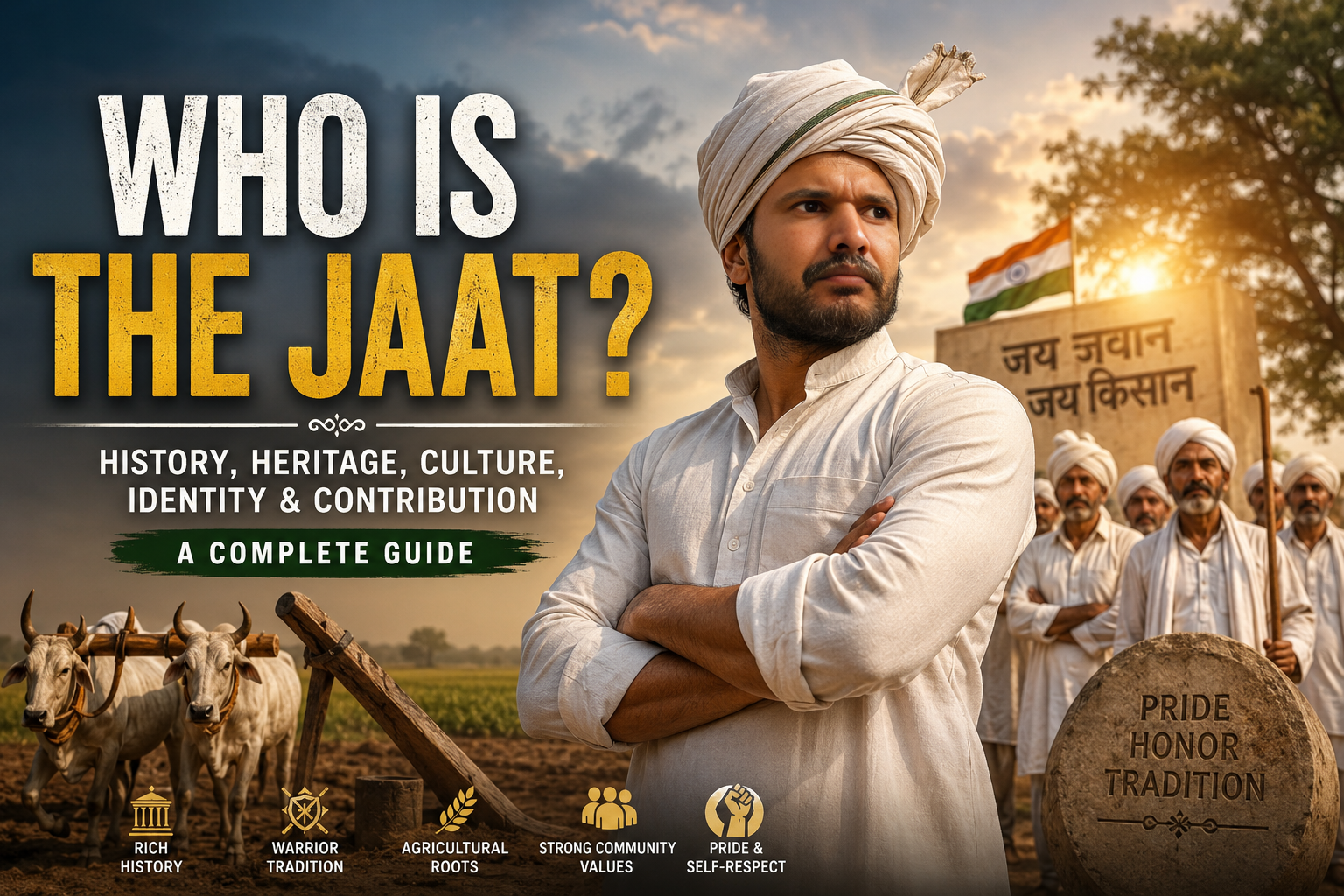
Introduction to the Jaat Community
The Jaat community is one of the most influential agricultural communities in South Asia. Traditionally, Jaats were farmers, cattle breeders, and warriors. Over time, they became politically powerful in many regions.
Jaats are known for:
- Strong agricultural background
- Physical strength and discipline
- Military traditions
- Community unity
- Leadership qualities
- Rural economic influence
The community is spread across:
- Rajasthan
- Haryana
- Punjab
- Uttar Pradesh
- Delhi
- Madhya Pradesh
- Gujarat
- Pakistan Punjab and Sindh
The spelling may differ as “Jat” or “Jaat,” but both refer to the same community.
Meaning of the Word Jaat
The word “Jaat” has several historical interpretations. Historians and researchers believe the term may have originated from ancient tribal names or Indo-Scythian groups.
Some theories connect the word with:
- Ancient pastoral tribes
- Indo-Aryan clans
- Central Asian warrior groups
- Agricultural tribes of northwestern India
There is no single universally accepted theory about the exact origin of the word. However, the identity of Jaats became strongly associated with land ownership, farming, and martial traditions.
Origin and History of Jaats
The history of the Jaat community is ancient and complex. Different historians have presented multiple theories about their origin.
Indo-Scythian Theory
Some historians believe Jaats descended from Indo-Scythian tribes who entered the Indian subcontinent centuries ago.
Indigenous Indian Theory
Other scholars believe Jaats are native to the Indian subcontinent and evolved from ancient farming and warrior tribes.
Pastoral Community Theory
Another popular theory suggests Jaats originated as cattle-herding and agricultural communities that later became land-owning groups.
Regardless of origin theories, Jaats have been part of the Indian social structure for many centuries.
Ancient References to Jats
Historical records and literature mention communities believed to be related to modern Jaats.
Ancient texts describe groups involved in:
- Agriculture
- Animal husbandry
- Warfare
- Regional administration
Greek historians and travelers also documented powerful tribes in northwestern India that some researchers associate with early Jat groups.
Jaats in Medieval India
During the medieval period, Jaats became increasingly influential in northern India.
They often resisted oppressive taxation and fought against foreign invasions. Many Jaat clans organized themselves into local confederacies and defended their territories.
The community became especially powerful in:
- Bharatpur
- Punjab
- Haryana region
- Western Uttar Pradesh
Jaats were known for:
- Horse riding
- Military skill
- Farming expertise
- Community organization
Jaat Kingdoms and Rulers
Several important Jaat kingdoms emerged during Indian history.
Bharatpur Kingdom
The Bharatpur kingdom became one of the strongest Jaat states in northern India.
It gained recognition for:
- Military strength
- Administrative capability
- Economic prosperity
- Resistance against Mughal dominance
Dholpur State
Dholpur was another princely state associated with Jaat rulers.
Sikh Jat Leadership
Many Sikh rulers and military leaders also belonged to Jat backgrounds, especially in Punjab.
Maharaja Suraj Mal and Bharatpur
Maharaja Suraj Mal is considered one of the greatest Jaat rulers in Indian history.
He ruled Bharatpur in the 18th century and became famous for:
- Administrative intelligence
- Military strategy
- Economic development
- Religious tolerance
Historians often describe him as one of the most capable rulers of his era.
Under his leadership, Bharatpur became a major political power in northern India.
Jaat Culture and Traditions
Jaat culture is deeply connected with rural traditions, agriculture, and family values.
Important cultural characteristics include:
Community Unity
Jaats traditionally maintain strong clan and village relationships.
Respect for Elders
Family hierarchy and elder respect remain important social values.
Physical Fitness
Historically, wrestling, horse riding, and physical strength were admired qualities.
Simplicity
The community often values practical living and straightforward communication.
Hospitality
Guests are treated with respect in Jaat households.
Jaat Language and Dialects
Jaats speak different languages depending on their region.
Common languages include:
- Hindi
- Punjabi
- Haryanvi
- Rajasthani
- Urdu
- Bagri
- Braj
Many local dialects developed through regional influence.
Jaat Religion and Beliefs
Jaats follow different religions depending on geography and family traditions.
Hindu Jaats
Most Jaats in Haryana, Rajasthan, and Uttar Pradesh follow Hinduism.
Sikh Jaats
Punjab has a large Sikh Jat population.
Muslim Jaats
Pakistan has many Muslim Jat communities.
Other Faiths
Some smaller groups may follow other religious traditions.
Despite religious diversity, many cultural traditions remain similar.
Jaats in Agriculture
Agriculture is one of the strongest identities associated with the Jaat community.
For generations, Jaats have been successful farmers and landowners.
They contributed significantly to:
- Wheat production
- Rice cultivation
- Dairy farming
- Irrigation development
- Green Revolution growth
In states like Haryana and Punjab, Jaat farmers played a key role in increasing agricultural productivity.
Jaats and the Green Revolution
The Green Revolution transformed agriculture in India during the 1960s and 1970s.
Jaat farmers quickly adopted:
- Modern irrigation
- High-yield seeds
- Tractors and machinery
- Scientific farming methods
This helped northern India become a major food-producing region.
Jaats in the Indian Army
The Jaat community has a long military tradition.
Thousands of Jaats have served in:
- Indian Army
- Border Security Force
- Police services
- Cavalry regiments
Jat Regiment
The Jat Regiment is one of the oldest and most respected regiments in the Indian Army.
It has participated in multiple wars and military operations.
Jaats are widely respected for:
- Discipline
- Courage
- Physical endurance
- Patriotism
Jaat Contribution to Politics
Jaats have played an important role in Indian politics.
Many influential political leaders came from the community.
Political influence is especially strong in:
- Haryana
- Rajasthan
- Western Uttar Pradesh
- Punjab
The community has often focused on:
- Farmer rights
- Rural development
- Reservation issues
- Agricultural policies
Famous Jaats in History
Several historical figures from the Jaat community became famous for leadership and bravery.
Maharaja Suraj Mal
A legendary ruler of Bharatpur.
Raja Nahar Singh
Known for resistance during the Revolt of 1857.
Chaudhary Chhotu Ram
An influential farmer leader and reformer.
Famous Modern Jaats
Modern Jaats have achieved success in sports, entertainment, politics, military service, and business.
Sports
Many successful wrestlers, boxers, and athletes belong to the community.
Politics
Numerous chief ministers and national leaders have Jaat backgrounds.
Entertainment
Actors and artists from Jaat families have contributed to Indian cinema and media.
Jaat Community in Haryana
Haryana has one of the largest Jaat populations in India.
The community has major influence in:
- Agriculture
- Politics
- Sports
- Education
Haryanvi Jaats are particularly known for wrestling and military participation.
Jaat Community in Rajasthan
Rajasthan has a strong Jaat population, especially in rural districts.
Rajasthani Jaats contributed significantly to:
- Farming
- Animal husbandry
- Regional politics
- Cooperative movements
Many villages in Rajasthan are dominated by Jaat agricultural families.
Jaat Community in Punjab
Punjab’s Jat Sikhs are economically and politically influential.
They are strongly associated with:
- Sikh history
- Agriculture
- Military traditions
- Punjabi culture
Jat Sikhs played a major role in Punjab’s agricultural success.
Jaat Community in Uttar Pradesh
Western Uttar Pradesh has a large Jaat population.
The community is influential in:
- Sugarcane farming
- Regional politics
- Cooperative organizations
Many farmer movements in the region involved Jaat leadership.
Jaats in Pakistan
Pakistan also has a significant Jat population.
Most Pakistani Jats are Muslim and live in:
- Punjab
- Sindh
Many are involved in:
- Agriculture
- Livestock
- Business
Jaat Gotras Explained
A gotra is a clan or lineage system used within the community.
Popular Jaat gotras include:
- Malik
- Dahiya
- Sangwan
- Ahlawat
- Punia
- Godara
- Sihag
- Jakhar
- Gill
- Sidhu
Gotras are important in marriage traditions and social identity.
Marriage Traditions in Jaat Society
Marriage customs vary by region and religion.
Common traditions include:
- Community-based matchmaking
- Respect for clan traditions
- Large family gatherings
- Traditional ceremonies
In many regions, marriages within the same gotra are traditionally avoided.
Education and Modernization
The Jaat community has increasingly focused on education and professional careers.
Today, many Jaats work in:
- Government services
- Engineering
- Medicine
- Business
- Information technology
- Entrepreneurship
Urbanization and globalization have changed traditional lifestyles.
Economic Influence of Jaats
The community holds significant economic influence in many rural regions.
Economic strength often comes from:
- Agricultural land ownership
- Dairy businesses
- Real estate
- Transportation
- Politics
In rapidly developing states, land values increased community wealth.
Jaat Festivals and Lifestyle
Jaats celebrate regional festivals with enthusiasm.
Popular festivals include:
- Holi
- Diwali
- Baisakhi
- Teej
- Lohri
Lifestyle characteristics often include:
- Traditional food
- Rural sports
- Folk music
- Community events
Traditional Food in Jaat Culture
Food habits vary by region but often include nutritious agricultural products.
Popular dishes include:
- Bajra roti
- Makki ki roti
- Sarson ka saag
- Lassi
- Ghee-based dishes
- Milk products
Strong dietary traditions are connected with physical labor and farming life.
Jaats and Sports
The Jaat community has produced many successful athletes.
Popular sports include:
- Wrestling
- Kabaddi
- Boxing
- Athletics
- Hockey
Physical fitness and competitive spirit remain important cultural values.
Jaat Women in Society
Women in the community increasingly participate in:
- Education
- Government jobs
- Sports
- Business
- Social leadership
Traditional and modern roles continue to evolve.
Common Stereotypes About Jaats
Like many large communities, Jaats are often associated with stereotypes.
However, stereotypes rarely represent the diversity of millions of individuals.
The community includes:
- Farmers
- Soldiers
- Scientists
- Politicians
- Entrepreneurs
- Artists
- Students
Modern Jaats come from diverse social and economic backgrounds.
Jaat Identity in Modern India
Modern Jaat identity combines tradition with modernization.
Young members of the community are active in:
- Social media
- Education
- Startups
- Civil services
- Global business
At the same time, many continue to value:
- Family traditions
- Agriculture
- Community support
- Cultural pride
Challenges Faced by the Community
Like many rural communities, Jaats face changing economic and social conditions.
Important challenges include:
- Agricultural uncertainty
- Water shortages
- Urbanization
- Employment competition
- Education gaps in rural areas
Community organizations often work on development and social reform.
Influence of Jaats in Rural India
The Jaat community continues to influence rural governance and social structure in many regions.
Village leadership, agricultural markets, and local politics are often shaped by strong community participation.
This influence has historical roots linked to land ownership and agricultural expertise.
Jaats and Social Reform
Over time, many leaders from the community promoted:
- Farmer rights
- Rural education
- Women’s participation
- Economic reform
These movements contributed to social and political awareness in northern India.
Global Presence of Jaats
Today, Jaats live across the world.
Large diaspora populations exist in:
- Canada
- United Kingdom
- United States
- Australia
- New Zealand
Many families migrated for:
- Education
- Employment
- Business opportunities
Despite migration, many maintain cultural connections with their ancestral villages.
Social Structure of the Jaat Community
The social structure traditionally revolves around:
- Family networks
- Clan systems
- Village communities
- Agricultural cooperation
Panchayat systems historically played an important role in local decision-making.
Jaats in Popular Culture
The community is frequently represented in:
- Regional cinema
- Folk songs
- Television
- Social media
Themes often include:
- Farming life
- Courage
- Humor
- Village traditions
- Strong personality traits
Why Are Jaats Famous?
Jaats are famous for several reasons:
- Agricultural success
- Military contribution
- Political influence
- Strong rural presence
- Wrestling and sports culture
- Historical kingdoms
- Community organization
Their influence is especially visible in northern India.
Are Jaats a Caste or Community?
The term “Jaat” can refer to both a social community and a caste grouping depending on context.
Different states classify the community differently under government categories.
The identity is also shaped by:
- Region
- Religion
- Occupation
- Clan traditions
Frequently Asked Questions About Jaats
Who are the Jaats?
Jaats are a large traditional agricultural and warrior community primarily found in northern India and Pakistan.
What is the origin of Jaats?
There are multiple historical theories regarding their origin, including Indo-Scythian, indigenous Indian, and pastoral tribe theories.
Which states have the largest Jaat population?
Haryana, Rajasthan, Punjab, and Uttar Pradesh have major Jaat populations.
Are all Jaats Hindu?
No. Jaats follow Hinduism, Sikhism, Islam, and other religions depending on region and family history.
Why are Jaats associated with farming?
Historically, agriculture has been the primary occupation of the community.
What are Jaat gotras?
Gotras are clan lineages used for social identity and marriage customs.
Are Jaats considered warriors?
Yes. The community has a long military tradition and strong participation in armed forces.
What is the Jat Regiment?
The Jat Regiment is a respected infantry regiment in the Indian Army.
SEO Keywords Related to “Who Is the Jaat”
To improve Google ranking, this article naturally targets these search terms:
- Who is the Jaat
- Jaat history
- Jat community meaning
- Jat caste history
- Jat culture and traditions
- Famous Jaats
- Jat religion
- Jat gotra list
- Jat farmers
- Jaat warriors
- Jat population in India
- Jat community details
Final Conclusion
The Jaat community has a rich history connected with agriculture, military service, leadership, and cultural traditions. From ancient tribal origins to modern political and economic influence, Jaats continue to shape many regions of India and Pakistan.
The community is diverse in religion, language, and lifestyle, yet united by strong traditions of hard work, courage, and community identity.
Understanding who the Jaat is requires looking beyond stereotypes and recognizing the historical, cultural, and economic contributions of millions of people across generations.
As India modernizes, the Jaat community continues adapting while preserving important elements of its heritage and social structure.
Suggested SEO Tags
who is the jaat, jaat history, jat community, jat caste, jat culture, famous jaats, jat religion, jat gotra, jat farmers, jat warriors, jaat in india, jat community history, jat traditions, bharatpur kingdom, maharaja suraj mal, jat regiment, jat population
Image Alt Text Suggestions for SEO
- Traditional Jaat farmer in Haryana field
- Maharaja Suraj Mal portrait illustration
- Jat Regiment Indian Army soldiers
- Rural Jaat village culture in Rajasthan
- Punjabi Jat Sikh farmer working in agriculture
Internal Linking Suggestions
- History of Haryana communities
- Agriculture in northern India
- Indian warrior communities
- Green Revolution in India
- Famous rulers of Rajasthan
External SEO Recommendations
To rank this article higher on Google:
- Use fast-loading website hosting
- Add optimized images with alt text
- Include FAQ schema markup
- Use mobile-friendly design
- Add internal links
- Publish related articles regularly
- Build backlinks from educational websites
- Keep keyword density natural
- Add social sharing buttons
- Update the article regularly
Schema FAQ Content
Q: Who is the Jaat?
A: The Jaat is a major agricultural and warrior community found mainly in northern India and Pakistan.
Q: What is Jaat history?
A: Jaat history includes agricultural traditions, military participation, regional kingdoms, and political influence.
Q: Which religion do Jaats follow?
A: Jaats follow Hinduism, Sikhism, Islam, and other religions depending on their region.
Q: Why are Jaats famous?
A: Jaats are known for farming, military service, sports achievements, and political leadership.